
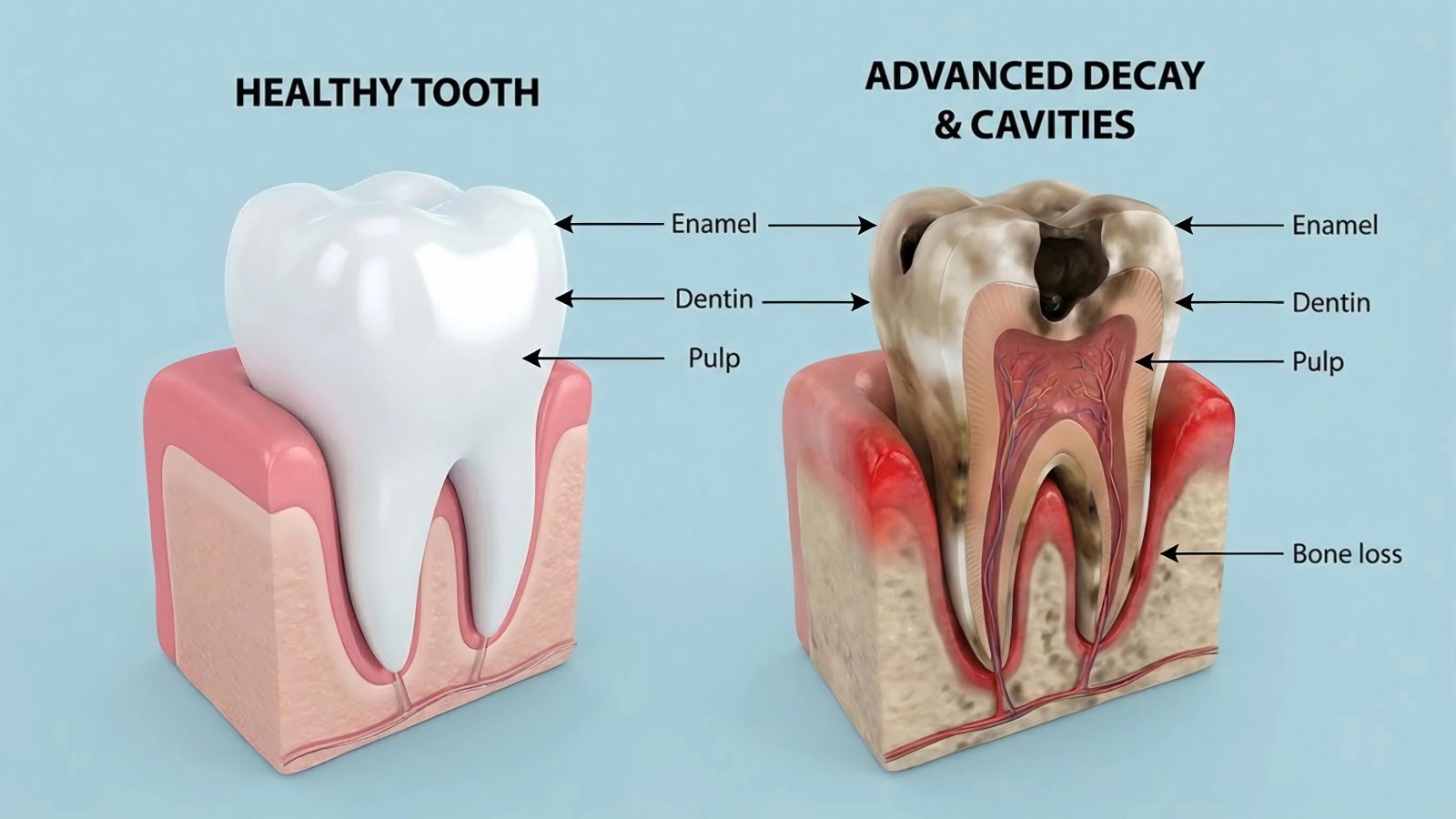
Deep tooth decay is a serious dental problem. When decay gets close to the tooth’s nerve, it can cause pain and infection. In many cases, people notice tooth decay symptoms like sharp pain, swelling, or sensitivity. As a result, understanding dental pain causes and how to treat them is important. Dentists often use root canal treatment to save teeth with nerve involvement. If you live in your city, knowing these facts can help you act quickly and protect your smile.
What Is Deep Tooth Decay?
Tooth decay starts when bacteria in your mouth make acids. These acids slowly eat away at the hard surface of your tooth, called enamel. Over time, the decay can move deeper into the tooth. Deep tooth decay means the damage has reached the inner layers. At this stage, the decay is close to or touching the pulp, which holds the tooth’s nerve and blood vessels. According to the World Health Organization, untreated decay is a top cause of dental pain worldwide.
How Does Tooth Decay Reach the Nerve?
First, decay forms a small hole, or cavity, in the enamel. Next, if left untreated, the decay spreads to the softer layer below, called dentin. Eventually, the bacteria and acids can reach the pulp. When this happens, the nerve inside the tooth becomes exposed to infection. Because the pulp is sensitive, even a small amount of decay here can cause severe pain. In some cases, the infection can spread beyond the tooth, leading to swelling in the gums or jaw.
Symptoms When Decay Reaches the Nerve
Once deep tooth decay affects the nerve, symptoms often become hard to ignore. For example, you may notice:
Sometimes, the pain may go away for a short time. However, this does not mean the problem is gone. Instead, it could mean the nerve is dying, which can lead to a tooth nerve infection.
Diagnosis of Deep Tooth Decay Affecting the Nerve
Dentists use several methods to check for deep tooth decay and nerve involvement. First, they will ask about your symptoms and examine your mouth. Next, they may tap on the tooth or test its response to hot and cold. X-rays help show how far the decay has spread. In some cases, dentists use special tools to check if the nerve is still alive. Because early diagnosis helps prevent more damage, regular dental checkups are important.
Treatment Options for Nerve-Involved Tooth Decay
When decay reaches the nerve, quick treatment is needed. The main options include:
Because root canal treatment is very effective, most people can keep their natural tooth.
Preventing Deep Tooth Decay and Nerve Damage
Preventing deep tooth decay is easier than treating it. To lower your risk, try these steps:
Because early decay often has no symptoms, regular dental visits help catch problems before they reach the nerve. In your city, many dental clinics offer preventive care to help keep your teeth healthy.
Conclusion:
When a cavity progresses deeper and reaches the tooth nerve, it can cause pain, sensitivity, and infection. Timely dental evaluation helps determine the right treatment approach and can help preserve the affected tooth with proper care.
Experiencing deep tooth pain or sensitivity?
Consult Dr. M. Sai Teja Reddy for expert dental evaluation and personalised treatment guidance.